





Top Off-Grid Solar Inverters for Homes, Cabins and RVs
- Understanding needs and system architecture for off-grid living
- What an off-grid solar inverter actually does
- System components and how they interact
- Key performance metrics I focus on
- Choosing the right inverter type and sizing the system
- Pure sine vs modified sine vs quasi-sine — when each makes sense
- Inverter-only vs inverter-charger vs hybrid inverter
- Sizing: continuous rating, surge capacity and battery voltage
- Feature checklist and practical comparison
- Essential features I require in off-grid installations
- How MPPT charge controllers fit with inverters
- Comparison table: typical off-grid inverter categories
- Installation considerations, reliability and maintenance
- Cable sizing, ventilation and location
- Battery chemistry and charge strategy
- Safety, certifications and long-term reliability
- My practical recommendations and product positioning
- How I recommend selecting a specific model
- Examples by application
- Why manufacturer and production quality matter
- Why I work with manufacturers like Guangzhou Congsin Electronic Technology
- Company profile and core strengths
- Production, certifications and innovation
- Product range and services
- FAQs — common questions I answer from real projects
- 1. What size off grid solar inverter do I need for a small cabin?
- 2. Can I use a modified sine wave inverter in an RV?
- 3. Should I choose an inverter-charger or a separate inverter and charger?
- 4. How do I ensure long battery life with my inverter?
- 5. What certifications should I look for when buying an inverter?
- 6. How do I handle surge loads like refrigerators or well pumps?
- Closing — contact and next steps
As someone who has designed and specified off-grid power systems for homes, cabins and mobile applications for many years, I know the difference the right off grid solar inverter makes. In this article I summarize how off-grid inverters differ by type and capability, explain how to size and select the best inverter for your load and battery system, and provide practical tips on installation, efficiency and reliability. I reference industry-standard guidance and explain trade-offs so you can make a verifiable, cost-effective choice for energy independence.
Understanding needs and system architecture for off-grid living
What an off-grid solar inverter actually does
An off grid solar inverter converts DC electricity from batteries (charged by PV panels or other DC sources) into AC power suitable for household appliances, RV outlets or cabin loads. For technical background see the inverter overview on Wikipedia: Inverter (electrical). Off-grid inverters may be simple inverter-only devices, inverter-chargers (which can charge batteries from an AC source), or hybrid inverters with integrated charge controllers and grid/backup switching functions.
System components and how they interact
An off-grid system typically includes PV panels, a charge controller (often MPPT), battery bank, the off-grid solar inverter, AC distribution and safety devices. For a concise overview of stand-alone power systems see Wikipedia: Stand-alone power system. The inverter’s compatibility with battery chemistry, its continuous and surge ratings, and its ability to integrate with an MPPT charge controller are critical to system reliability.
Key performance metrics I focus on
When I evaluate off grid solar inverter options I prioritize: continuous output rating (Watts), surge capability (short-term peak Watts), waveform (pure sine vs modified sine), efficiency (%), inverter type (inverter-only, inverter-charger, hybrid), battery voltage compatibility (12/24/48V), and protections (overload, temperature, low-voltage disconnect). Typical inverter efficiencies range from ~85% for low-cost modified-sine units up to 95–98% for quality pure sine wave inverters; see general inverter performance discussion on Wikipedia.
Choosing the right inverter type and sizing the system
Pure sine vs modified sine vs quasi-sine — when each makes sense
Pure sine wave inverters produce a smooth AC waveform identical to utility power and are necessary for sensitive electronics, many appliances with motors, variable-speed pumps, and audio/video equipment. Modified sine inverters are cheaper and acceptable for resistive loads (heaters, incandescent lights) and some power tools, but they can cause increased heating, noise or malfunction in sensitive devices. For most homes, cabins and RVs where electronics and inductive loads are present, I recommend pure sine wave off grid solar inverter units to avoid compatibility issues.
Inverter-only vs inverter-charger vs hybrid inverter
Inverter-only: Converts DC → AC only. Best for simple solar + battery off-grid systems where charging is handled by a separate charge controller or generator.
Inverter-charger: Adds AC battery charging capability (from a generator or shore power), automatic transfer switching and configurable charging profiles — useful for cabins with generator backup or RV shore power.
Hybrid inverter: Integrates MPPT charge controller, inverter and sometimes energy management features; ideal where space, simplicity and integrated monitoring matter.
Sizing: continuous rating, surge capacity and battery voltage
Size the inverter so continuous rating ≥ expected continuous AC load, and surge rating covers appliance start-up currents (motors, compressors). For example, a refrigerator may draw 700 W running but 2000–3000 W at start — that means your inverter needs sufficient surge capacity even if the continuous load is modest. Also match inverter input voltage to your battery bank (12V for small RVs, 24V or 48V for larger off-grid homes) to reduce cable losses and increase efficiency.
Feature checklist and practical comparison
Essential features I require in off-grid installations
From my field experience, an off grid solar inverter should include: pure sine output, robust surge rating (2–3× continuous), high efficiency (≥92% at typical load), low idle consumption, protection features (over/under-voltage, over-temp, short circuit), and reliable thermal design. For remote cabins and RVs, remote monitoring and an accessible user interface are valuable for troubleshooting.
How MPPT charge controllers fit with inverters
MPPT (Maximum Power Point Tracking) charge controllers maximize PV harvest and are commonly paired with off-grid inverters. Some hybrid inverters include an integrated MPPT; in other designs you’ll install a separate MPPT between the PV array and battery. For background see Wikipedia: Maximum power point tracking. Integrated solutions reduce wiring and simplify installation, but separate components may offer superior flexibility and serviceability.
Comparison table: typical off-grid inverter categories
| Category | Best for | Typical continuous rating | Waveform | Typical efficiency | Pros/Cons |
|---|---|---|---|---|---|
| Portable pure sine inverter/charger | Small cabins, RVs, portable backup | 500–3000 W | Pure sine | 90–95% | Compact, often includes charger; limited surge on small units |
| Fixed pure sine inverter (off-grid) | Off-grid homes, larger cabins | 3000–10,000+ W | Pure sine | 94–98% | High surge capacity, robust; more expensive, needs cooling/ventilation |
| Hybrid inverter with integrated MPPT | Space-constrained systems, integrated control | 2000–8000 W | Pure sine | 92–96% | Simplified wiring, monitoring; less modular than separate components |
| Modified sine inverter | Basic resistive loads, budget systems | 300–3000 W | Modified sine | 80–90% | Low cost but limited device compatibility |
Sources for typical efficiencies and categories: industry literature and product datasheets; see inverter technical overview on Wikipedia.
Installation considerations, reliability and maintenance
Cable sizing, ventilation and location
Proper DC cable sizing reduces voltage drop and heating. For battery-to-inverter connections, I always calculate worst-case current and select cables with minimal voltage drop (typically <3% for critical runs). Mount inverters where ambient temperature is controlled or well-ventilated; many failures I’ve seen result from high ambient temps and dust ingress rather than electronic defects.
Battery chemistry and charge strategy
Different batteries (flooded lead-acid, AGM, gel, LiFePO4) require different charging voltages and profiles. If an inverter includes an onboard charger, ensure it supports the battery chemistry you plan to use. For technical guidance on off-grid PV and battery integration, see basic PV tech overview at the U.S. Department of Energy: energy.gov.
Safety, certifications and long-term reliability
Choose inverters with recognized safety and performance certifications (CE, EMC, UL/ETL where relevant). For manufacturing quality systems, ISO 9001 is a widely recognized standard: ISO: ISO 9001. Certs and proven testing processes reduce risk; demand datasheets showing continuous/surge ratings and environmental operating ranges.
My practical recommendations and product positioning
How I recommend selecting a specific model
Step 1: Audit loads — list continuous and startup Watts for all AC devices; identify critical vs non-critical loads.
Step 2: Decide waveform requirements — if you have sensitive electronics and motor loads choose pure sine.
Step 3: Match battery bank voltage to inverter input (12/24/48V) to reduce losses.
Step 4: Choose inverter type — inverter-only, inverter-charger or hybrid — based on whether you need generator/shore charging or integrated MPPT.
Step 5: Verify certifications, efficiency and manufacturer support/warranty.
Examples by application
RVs and van conversions: I typically specify 1000–3000 W pure sine inverter-chargers on 12V or 24V systems, depending on appliances.
Off-grid cabins: For small cabins a 3000–5000 W pure sine inverter with a quality MPPT controller and a 24–48V battery bank gives a good balance of capacity and wiring economy.
Off-grid homes: For full household loads consider 5kW–10kW inverter systems, preferably 48V battery banks to reduce DC current.
Why manufacturer and production quality matter
Reliable long-term operation depends on robust component selection, thermal design and quality control. Manufacturers operating automated production lines and comprehensive testing regimes are less likely to ship units that fail early in the field. For example, quality control aligned with ISO9001 and international approvals reduces warranty incidents and improves field reliability.
Why I work with manufacturers like Guangzhou Congsin Electronic Technology
Company profile and core strengths
Guangzhou Congsin Electronic Technology Co., Ltd., founded in early 1998, is a professional power inverter manufacturer with over 27 years of focused experience. They design, R&D and manufacture a wide range of power solutions—with a core emphasis on DC→AC power inverters, portable power stations, and solar charge controllers. Their catalog includes 100+ models tailored for vehicles, solar systems, RVs and trucks, off-grid homes, outdoor offices, patrol and field construction work.
Production, certifications and innovation
Congsin operates fully automated production lines, advanced instrumentation and multifunctional testing equipment to ensure product reliability, efficiency and intelligent functionality. Their quality system is ISO9001 certified and many products hold international approvals such as CE, EMC, LVD, ETL, FCC, RoHS and E-MARK. Several independently developed patents further demonstrate their commitment to innovation and product maturity.
Product range and services
Their core product categories relevant to this article include Solar Charge Controllers, modified sine wave inverters, pure sine wave inverters, and portable power stations. Congsin supplies global markets across Europe, the Americas, the Middle East, Africa and Southeast Asia and supports OEM/ODM, private labeling, distribution and bespoke customization to meet partner specifications. Their combination of long experience, manufacturing capability and certifications makes them a strong choice when sourcing reliable off grid solar inverter solutions.
FAQs — common questions I answer from real projects
1. What size off grid solar inverter do I need for a small cabin?
Start by listing all appliances and their running and startup Watts. For a small cabin with lighting, a small fridge, and basic electronics, a 2000–3000 W pure sine inverter on a 24V system is a common choice. Make sure surge capacity covers compressor start-up currents.
2. Can I use a modified sine wave inverter in an RV?
You can for resistive loads, but I avoid modified sine inverters for RVs that run microwaves, certain battery chargers, motor controllers or sensitive electronics because of compatibility and efficiency problems. I recommend pure sine for most RV installations.
3. Should I choose an inverter-charger or a separate inverter and charger?
Inverter-chargers simplify wiring and offer automatic shore/generator charging — convenient for RVs and cabins with generator backup. Separate inverter plus MPPT and charger provides modularity and can be easier to repair or upgrade. Choose based on system complexity and serviceability preferences.
4. How do I ensure long battery life with my inverter?
Use a charging profile matched to your battery chemistry, avoid deep discharges when possible, use adequate battery capacity for your daily loads, and maintain proper temperature control. An inverter with configurable low-voltage disconnect helps protect batteries from excessive discharge.
5. What certifications should I look for when buying an inverter?
Look for safety and conformity marks relevant to your region: CE and EMC for Europe, ETL or UL listings for North America, RoHS for hazardous materials, and manufacturer quality systems like ISO9001. These indicate tested performance and manufacturing controls.
6. How do I handle surge loads like refrigerators or well pumps?
Pick an inverter with surge ratings at least 2–3× the continuous rating, and consider soft-start devices or dedicated starters for pumps. Verify manufacturer surge duration (e.g., 10 ms vs 5 s) to ensure compatibility with your equipment.
Closing — contact and next steps
I hope this guide helps you choose the right off grid solar inverter for your home, cabin or RV. If you’d like tailored advice for a specific system — including load audits, recommendations for pure sine wave inverters, inverter-chargers or hybrid solutions — contact Guangzhou Congsin Electronic Technology Co., Ltd. Their experience and wide product range (solar charge controllers, modified sine and pure sine inverters, portable power stations) make them a reliable partner for OEM/ODM and customized solutions. For more details or to request product specifications and pricing, contact Congsin or view their product catalog.
Contact/Request: reach out to your Congsin representative to discuss system requirements, certifications and customization options. Make sure to provide your daily load profile, desired autonomy (days of backup), battery type and preferred battery voltage so they can recommend the optimal off grid solar inverter configuration.
Best 1000W Car Inverters 2026: Top Models Compared
Comparing Pure Sine Wave vs Modified Sine Vehicle Inverters
Choosing off-grid solar inverters for RVs, boats and tiny homes
How to Choose Right Wattage Car Power Inverter
Modified Sine Wave Inverters
What is the difference between modified sine wave and pure sine wave?
Modified sine wave is suitable for most ordinary home appliances and electronic devices; pure sine wave is suitable for devices with extremely high power requirements (such as precision instruments). This modified sine wave is more cost-effective and meets the needs of most daily scenarios.
Does it only support DC12V input voltage?
The regular model has DC12V input, and other input voltages such as DC24V can be customized. Please consult customer service for details.
Can 4 USB ports fast charge at the same time?
Yes, 4 USB ports can fast charge mobile phones, tablets and other devices at the same time, meeting the needs of simultaneous charging of multiple devices.
What is the working principle of the UPS function?
When the external power supply is normal, the inverter powers the device and charges the battery; when the external power supply is interrupted, it automatically switches to battery power to ensure uninterrupted operation of the device.
Pure Sine Wave Inverters
Can this inverter drive a 3P air conditioner and a refrigerator at the same time?
Yes. The rated power of a 3P air conditioner is about 2200W-2500W, and an ordinary double-door refrigerator is about 150W-300W, with a total power of about 2350W-2800W, which does not exceed the 3000W continuous power; and the peak 6000W can cope with the instantaneous startup impact of the air conditioner. When using, ensure the battery capacity is ≥200Ah (12V) to ensure battery life.
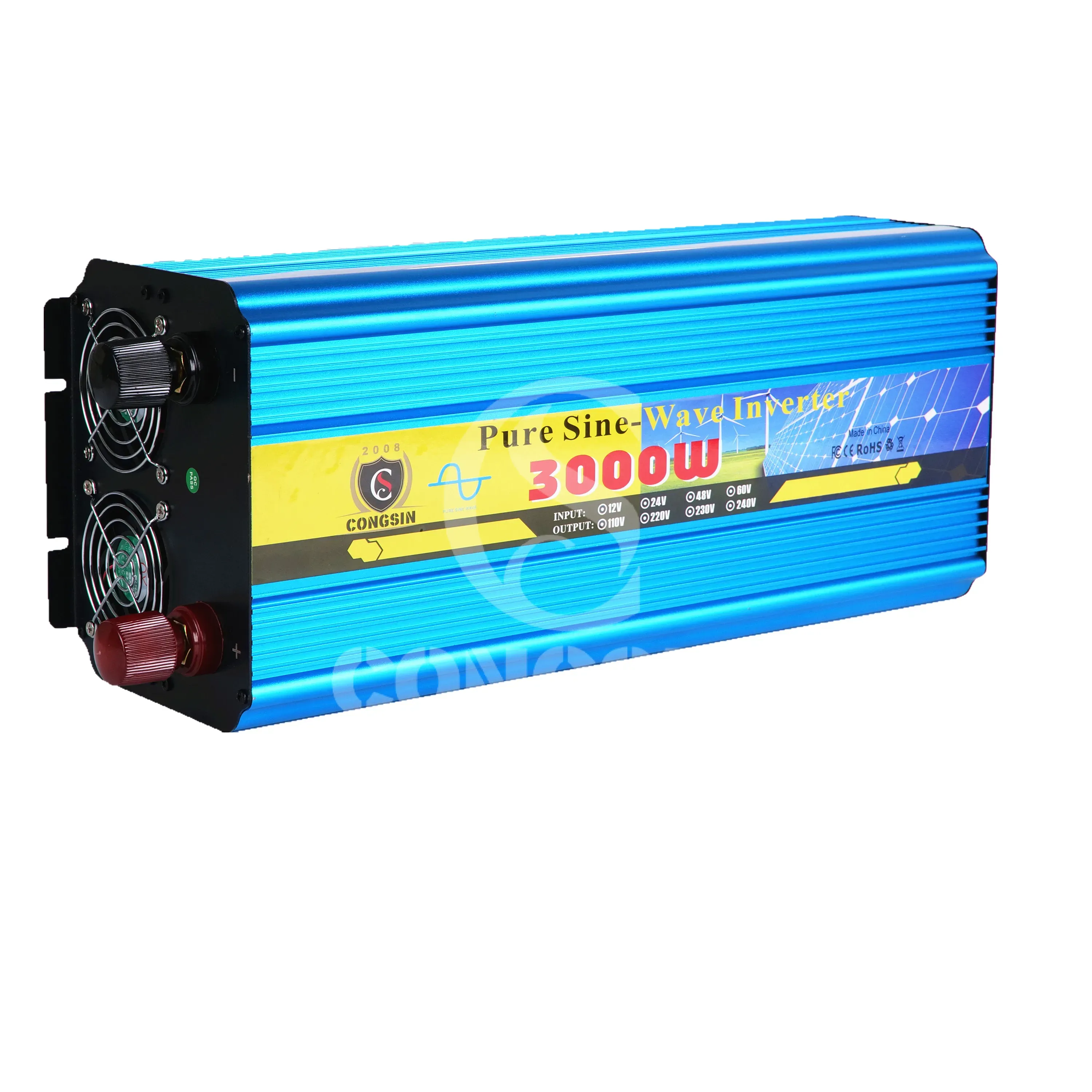
Congsin 3000W LCD Pure Sine Wave Inverter for Home Use Solar Backup Power Inverter Off Grid UPS
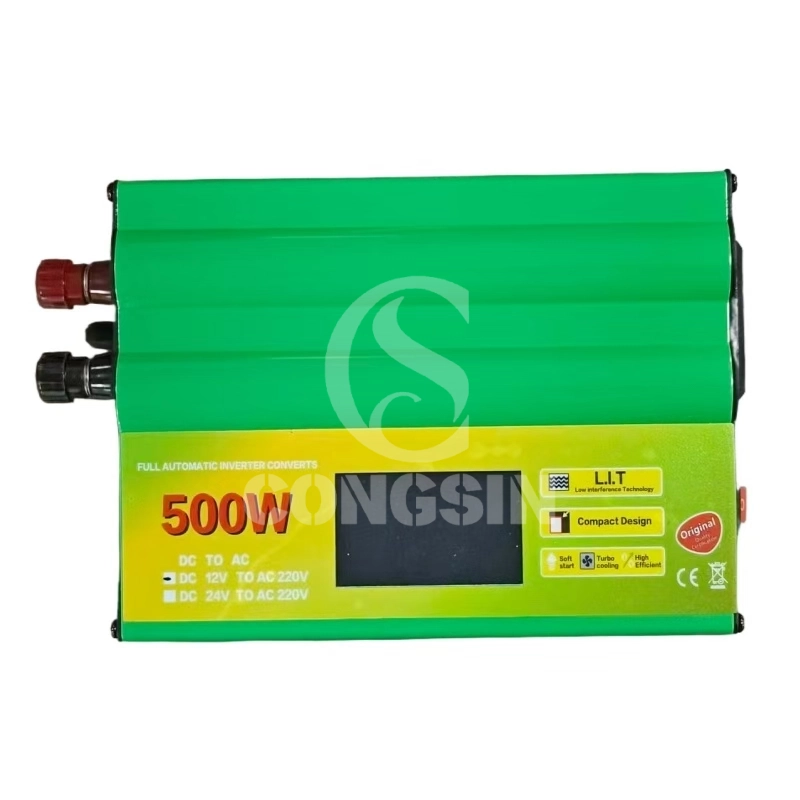
Congsin Modified Sine Wave Inverter 500W 1000W 1500W 12V LED Display Portable for RV Car Solar
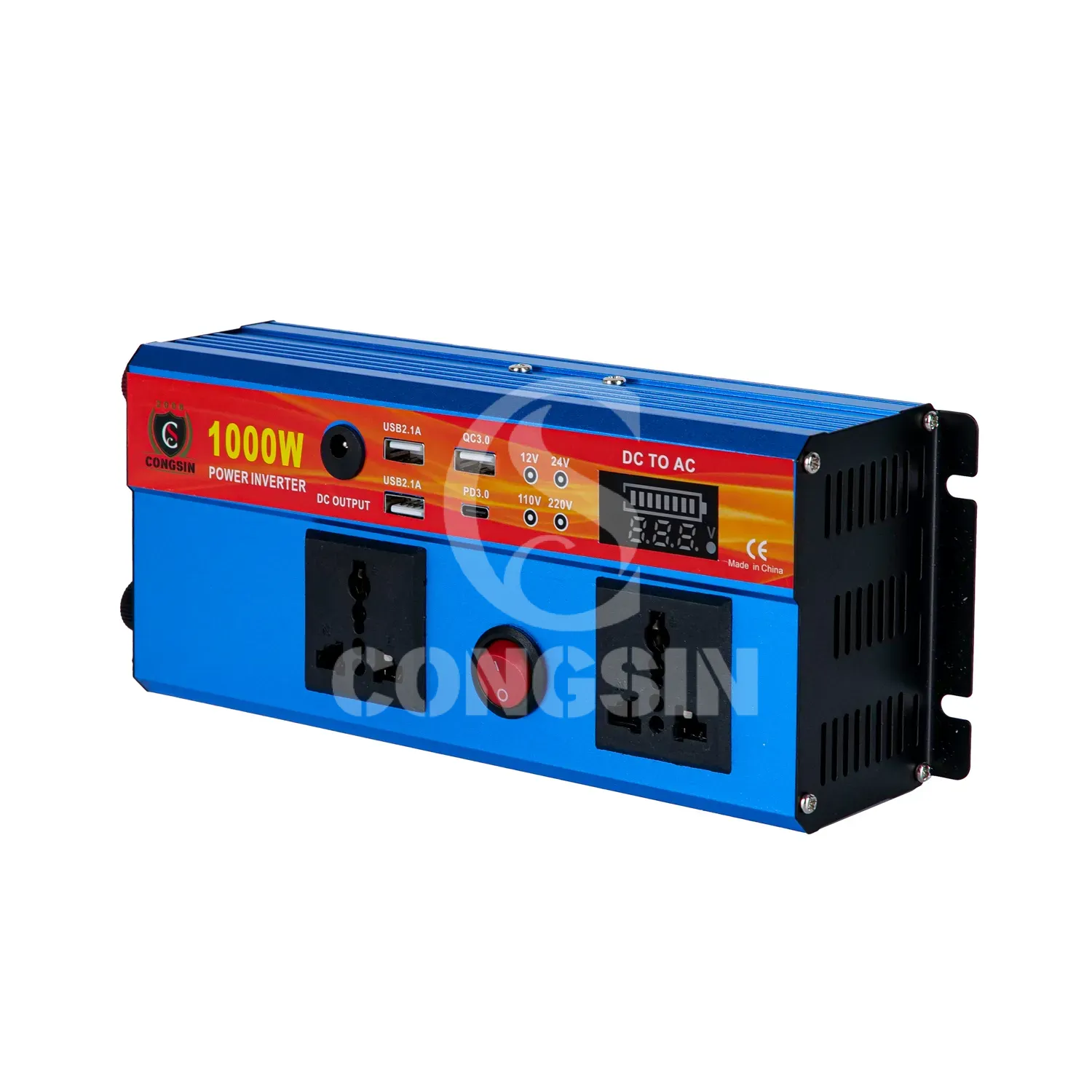
Congsin 1000W modified sine wave inverter with LED display and Type C port car RV power inverter
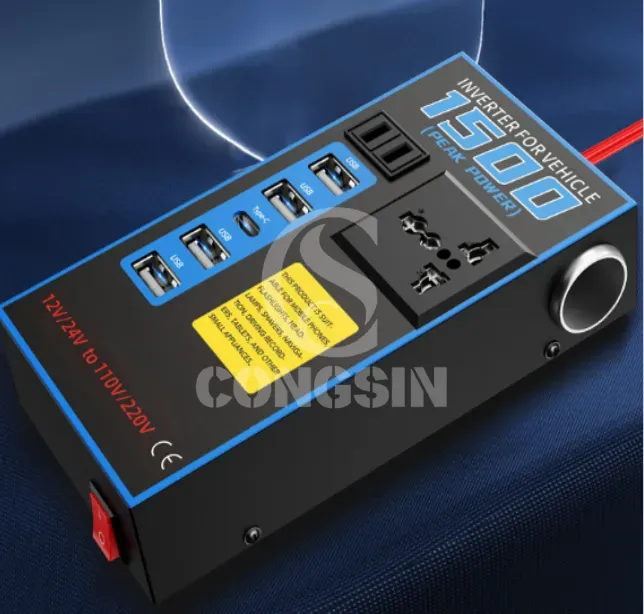
Congsin 1500W Inverter for Vehicle DC 12V/24V to AC 110V/220V with Universal socket Modified Sine Wave

CONGSIN is a trusted OEM factory for power inverters, solar charge controllers, and DC converters. Reliable solutions for global B2B buyers.
 High Quality
 7/24 Service
 Guaranteed Warranty
© 2025 Congsin. All Rights Reserved.